

Beggars Tick Wildlife Refuge has been turned into a temporary encampment for Portland's homeless under a plan from Mayer Charlie Hales.
Phoebe Flanigan / OPB
Homelessness and affordable housing are just two of the issues in the race for seat number four on the Portland City Council.
Steve Novick currently occupies that seat, and he's running for re-election for the first time. Dave Miller spoke with Novick and three of his leading challengers on Think Out Loud: Stuart Emmons, architect and urban planner; Chloe Eudaly, independent book store owner and an affordable housing activist, and Fred Stewart, a real estate agent and former president of the King Neighborhood Association.
Excerpts from the conversation have been edited for clarity and brevity:
Dave Miller: Why do you think you're the best person for this seat on the City Council?
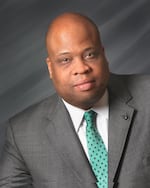
Fred Steward, candidate for Portland City Council, position four.
Courtesy of the Fred Steward campaign
Fred Stewart: The reason why I'm the best person is I understand the history of this community, and not just going back to when it was first created, but I'm talking about just over the last 25 years. A lot of the things that people like about Portland, a lot of the reasons people are moving to Portland, I've been around for. And I really don't think Steve Novick or anybody else on city council are making decisions based on the values of the average person in Portland. It's very mean-spirited. We're not inclusive; we're not compassionate; and most importantly we're not effective. Not one single decision in the last three or four years on city council has been effective in advancing the values of the people of Portland, what we want to see here in Portland.
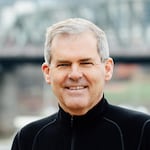
Portland City Council candidate Stuart Emmons
Courtesy of the campaign
Stuart Emmons: I'm an architect, and in my architectural work I did a lot of work in the last 25 years on homeless, housing, homeless services and also I've done a lot of work with affordable housing. And as an urban designer I've designed livable neighborhoods across Portland and through those neighborhood projects, I've done a lot of collaborative work with community members to work through hard solutions, or work to hard solutions, that people really came around and felt that the solution was part of their, came from their community. I'm also from the private sector. I've run a small business unlike a lot of the people on city council, and I think that skill set is absolutely essential in this role. I like to get stuff done. And I don't think much has been getting done in the last three years. We have a lot of priorities that you just talked about earlier and we need to make more progress.
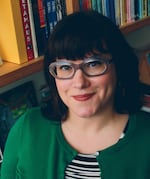
Chloe Eudaly, candidate for Portland City Council, position four.
Courtesy of the Chloe Eudaly campaign
Chloe Eudaly: I'm running for city council because I believe we need more diversity in our council members. And as a woman, a renter, a small business owner, and a person of relatively modest means, I can bring some of that diversity. I'm committed to always putting people before profit, putting public health before polluters, and to fight for the people that Portland isn't working for right now. I am a political outsider. I've never run for political office before, but I have a 25 year track record of activism, advocacy, and service to our community and being an outsider has its perks, I think. I won't be bringing any insider baggage to city hall, including campaign contributions from big business.
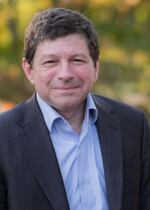
Steve Novick, incumbent candidate for Portland City Council, position four.
Courtesy of the Steve Novick campaign.
Steve Novick: I think Portlanders want a city hall that is progressive and fiscally responsible. An example of both is the local temporary gas tax that we have on the ballot in May. It's fiscally responsible to repair the streets that we've been neglecting for 30 years, because the longer you wait to repair a street, the more expensive it is to fix it and it's progressive to make investments in sidewalks and safer crossings in neighborhoods where right now it's dangerous for kids to walk to school or seniors to walk to bus stops, particularly in the lower-income neighborhoods in the outer Eastside. I also think that we need leaders who are persistent. And for the past 30 years, transportation commissioners have proposed a way to get some money to fix the streets and then have encountered political opposition and then backed down. A couple of years ago, I proposed a way to fix the streets and made some mistakes along the way and got some political opposition, but instead of giving up on it, I came back and worked with the community to develop this proposal which we think has a very strong chance of passing in May and getting some work done.
Dave Miller: How would you deal broadly with homelessness?
Stuart Emmons: First of all, as I said earlier, I have 25 years experience with homelessness and I work collaboratively. And I think that's absolutely essential. I would first of all stop the pipeline of people who are going into homeless housing, with more emphasis on affordable housing. I would listen to the needs of the homeless. And I would obviously employ a housing first model. I've done innovative housing, affordable housing, innovative housing with my modulars, so looking at prefabs, looking at tiny houses. I've got a lot of experience with that. I would inventory public and private lands and buildings and sites. And also we oughta take a look at local and state vouchers to close the gap that's been really effective with our vets and we oughta be doing that with other people. But I want to get everyone on the same page. Home for Everyone, the PBA, are kind of going in different directions, there are a lot of advocates, I think we ought to add in MBAs and creative thinkers and really getting everybody around a solution for the 1,800 people on the street and other people in shelters, and make a plan that has a defined time period, like 6 years and do it.
Dave Miller: What do you make of the city's current policies with regard to homelessness?
Fred Stewart: I feel it's lazy and mean spirited. I mean honestly. Allowing people to sleep on the street. Having no sanitary resources, no ability to take a bath, no ability to take a — to use the restroom. We're not protecting the women and children who are homeless. We've got criminals. Of the 1,800 out there, probably 600 are flat out criminals. We got about 600 people who are mental and we got about 600 people who just can't afford a place to live. You know, the mayors should be right now developing transitional housing, allowing people an opportunity to have that time out. Like the old days when we had the YMCA. You know, you lose your place to live, you get kicked out by your roommate. You got a cheap place to get a bed, be able to take a shower, be able to rebuild. We've got those people that are needed out there. Instead we say, pitch tent, we say dig a hole, you know. Right now we got business people who are complaining that they're losing business in downtown Portland because they can't get the urine smell out of their front door. You know they catch people taking a crap in their flower beds. And the police can't do anything with it. I've been told by county people and Portland police officers, that 100% of the women that are homeless have either been raped, or molested or prostituted.
Steve Novick: First of all, issues of housing and affordability are, to a great extent, a reflection of the big national problem of income inequality and I support Bernie Sanders for President because he is the most committed to doing something about income inequality nationwide. Homelessness is a major issue, not just for Portland, but for Los Angles and Seattle and San Francisco and Vancouver and if there were easy, silver bullet solutions, one of those cities would have conquered the issue. We have taken some steps recently. I mean, it's something that people have been working hard on all along. But we have opened up a new women's shelter in the armory in my neighborhood in Multnomah Village. So, there's some women who are getting shelter that weren't getting shelter before. Some people in the private sector have stepped up. Jordon and Barry Menashe have opened up a floor of their building, at one of their buildings downtown as a temporary homeless shelter. We have been working with R2D2, which is a homeless community which was downtown. Right 2 Dream, Too, and they have been an exemplary organization, the police don't get called to Right 2 Dream, Too. Which is why we worked so hard to find another location for them, when that one became untenable. And I think that that's good, to signal to people in the homeless community that if you put together a structure that works and you keep crime out of your system and you seemed to be helping people, that we will go out of our way to help you out. We just approved a significant of new money for additional shelters and for a short term rent assistance ... I'm not saying that what we've done so far is in and of itself is going to be sufficient to solve the problem of homelessness, and we are open to ideas from anybody who has them.
Dave Miller: Would your approach to homelessness be any different than anything you've heard from commissioner Novick or your other opponents?
Chloe Eudaly: Well, first of all, I want to say there's not single cause of homelessness, so there's no single solution. People are on the streets for a variety of reasons. But the biggest growth in our homeless population, the biggest categories are families, people of color, elderly people. Twenty-five percent of our homeless population have income and jobs, they simply cannot find housing that's affordable. And I want to pull back from the homelessness conversation for a moment and suggest that if we don't do something about affordable housing for people who are already in housing but who are burdened by it, we will never solve our homeless problem, because we currently have hundreds of people, we don't have good numbers on how many people are homeless. It's more than two to four thousand people at this point. People are going to continue to slip into that category. What I would like to see, and unfortunately the city co-opted this language in their housing state of emergency. They didn't call a true state of emergency, we actually have a statute on ORS that says in the event of a man-made or natural disaster, that results in material loss of housing, we can institute rent control, and I strongly believe that's what we need to do. We have had a material loss. We've lost almost 15 hundred affordable units, during a time when Portland made a commitment to no net loss, and the demand has grown exponentially. We've lost hundreds of homes to illegal, full time, short term rentals and we've lost hundreds more homes to developers tearing down modest homes that were formerly rental homes and building these gargantuan single family dwellings.
Listen to the full Think Out Loud to hear more about the candidates views on affordable housing, rent control, the proposed Portland gas tax, and what bureaus the candidates would want to be assigned if they were elected.
