
Last year, the Parkrose School District in Southeast Portland received $415,000 from the state to provide summer learning opportunities for students. The school district’s four-week summer program included a balance of academics and fun. Parkrose officials said it “focused on building literacy skills, providing meals, enrichment, and critical partnerships with community-based partners that help bring swimming and other recreational opportunities during the program for our students.”
But Parkrose Superintendent Michael Lopes Serrao said the district will not be able to run its program this summer.
“We are deeply disappointed, particularly considering the needs of our kids and community,” Lopes Serrao said in an email to OPB. Nearly half of Parkrose’s students experience poverty, according to state data.
Parkrose is one of more than 25 school districts that received no funding for summer programming this year after receiving thousands for programs last summer.
The state provides $35 million to school districts statewide to provide summer learning programs. Tuesday, Governor Tina Kotek announced the recipients in a press release.
“Every student deserves the opportunity to build strong reading skills,” Kotek said in the release.
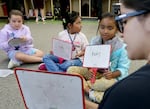
Teacher Angelica Alaniz works with students on reading skills during a bilingual summer learning program at Imlay Elementary School in Hillsboro, Ore., on Wednesday, July 31, 2024. Hillsboro is one of several school districts who received summer funding in 2025 and in 2026.
Natalie Pate / OPB
“These summer programs give students the time, support, and real-world experiences they need to grow their confidence and stay on track for success.”
The Oregon Department of Education said it received 143 applications requesting $49 million, with 106 applicants chosen.
“Many strong applications were not funded, including from districts with clear need and demonstrated success,” shared department spokesperson Liz Merah in a statement to OPB.
Last year, the Reynolds School District received $1,000,000 to provide summer programming for students. They served over 1,000 students from elementary to high school. The academic support helped 40 students graduate last summer.
Both Parkrose and Reynolds serve a diverse student body, including a substantial number of students learning English. In Reynolds, over half of the students are experiencing poverty.
When Reynolds Supt. Frank Caropelo saw the message about the summer learning grants, he was shocked his district wasn’t on the list.
“I was dumbfounded and deeply, deeply disappointed,” Caropelo said. “It’s just astounding to me how some of the neediest students in the state were denied summer funding.”
Summer learning programs have become a regular occurrence in the years after the COVID-19 pandemic. Year after year, districts asked the state to support more opportunities for students to catch up in reading and math and provide enrichment opportunities.
In 2025, grants went out to about 130 educational entities, including school districts, education service districts, and tribes, serving 29,739 students. This year, there were 106 grant recipients. New this year was a “competitive process emphasizing student need and program quality.”
“These grants will support summer learning programs in 30 of Oregon’s 36 counties, helping tens of thousands of students strengthen literacy through engaging, hands-on experiences over the next three summers,” Merah shared. “Per the submitted applications, an estimated 32,242 students will be served annually.”
In a joint statement to OPB, leaders from the Reynolds, Gresham-Barlow, and Parkrose said more than 3,000 students in East Multnomah County will not have access to “state-supported summer learning opportunities.”
“This outcome is particularly concerning given the legislative intent to prioritize students who have historically experienced academic disparities,” the leaders wrote. “Our student populations reflect exactly those priorities. The absence of funding in our communities raises serious questions about whether the current methodology is effectively aligning resources with student needs.”
Jeffrey Fuller, Reynolds High School teacher and president of the union representing Reynolds teachers, said students and their parents get essential support from summer programs.
“A lot of these families can’t afford childcare, they are working, and this is a part of that,” Fuller said. “A lot of kids eat here during the summer.”
Oregon students have significant academic disparities based on income.
Fuller thinks of summer programming as a way to equalize education outcomes and opportunities for all students. But without funding from the state, there’s a risk Reynolds students will fall further behind than their wealthier peers.
“We know the gap gets wider in the summer months when kids are not in school for kids who are poor and kids who are wealthier, that gap grows just based on ability to travel, access to different things that are educational,” Fuller said.
“To cut that from what is one of the most diverse and high needs districts in the state is just — it’s going to make that gap wider.”
Research on the effect of the “summer slide” on student outcomes is mixed. A 2007 study from Johns Hopkins University identified an income-based “achievement gap at 9th grade mainly traces to differential summer learning over the elementary years.” Research from the Portland-based assessment company NWEA, summarized in a recent article, was less conclusive.
In the joint statement, leaders from Reynolds, Gresham-Barlow, and Parkrose highlighted the state’s new accountability system, which requires districts to set goals to meet educational outcomes. They say summer learning could help their students meet those goals.
“Without access to these programs, the gap between expectations and available supports will only widen,” they shared.
The lack of funding for summer programs comes as Reynolds and other districts are making budget decisions for the next school year.
“We just laid off another 150-some people … it’s almost 250 in the last three years,” Fuller said. “How many times do we have to get kicked and do we have to pull programs away from kids and teachers and increase class sizes?”
Caropelo, the Reynolds superintendent, said the district is facing a $21 million deficit.
“We were counting on these summer funds to provide summer programs,” Caropelo said. “So at this point, I can’t commit to being able to provide any summer programs for our students.”
Both Caropelo and Fuller said they hope the state reconsiders its decision.
In Parkrose, some summer programming will continue. Supt. Lopes Serrao said they’re focusing on providing meals, helping high school students recover credits they need to graduate and working with the Portland-area Schools Uniting Neighborhoods program to “help provide some experiences for students.”
“However, it will be limited to certain students.”
